The Scientific History of Mindfulness: Unveiling the Paradox

The findings of a new four-year investigation provide comprehensive insights into how mindfulness developed and its current status. Despite significant scientific concerns, the research illustrates how mindfulness was promoted as an influential health and well-being intervention. The least known but most controversial aspect of the ‘mindfulness revolution’ is the reconfiguring of spiritual practices as tools for social and economic control.

The latest in-depth research explains why scientists and clinicians are rethinking the idea that mindfulness is a universal mental health treatment.

The most comprehensive scientific review of the popular Western form of mindfulness meditation, medicalised mindfulness, has just been completed. The Scientific History of Mindfulness (SHoM) describes the creation of Mindfulness-Based Stress Reduction (MBSR) in the late 1970s and charts the development of hundreds of Mindfulness-Based Interventions (MBIs) in the following decades. MBSR was part of a movement that sought to capture the health benefits of spiritual practices. Uniquely, MBSR was presented as a health intervention that ‘bridged’ scientific and religious knowledge. In 2004, Mindfulness-Based Cognitive Therapy (MBCT) was endorsed for clinical use in the UK, increasing public and scientific confidence in medicalised meditation. By 2010, mindfulness stakeholders declared that a ‘mindfulness revolution’, which would profoundly impact society, was taking place.

Politicians and health policy agents enthusiastically promoted the benefits of mindfulness, particularly in the UK. The hype also bled into social policy, where in 2014, mindfulness was presented as a tool for social control and improved economic performance. Under the concept of ‘mental capital,’ the rollout of mindfulness in UK schools was made a priority.

Dr Stephen Gene Morris

By 2018, many meditation scientists were criticising the experimental findings on which mindfulness’s success had been built. Over the decades, reviews of meditation experiments have frequently highlighted limitations in mindfulness research. However, a tendency among some scientists and policymakers to ignore negative scientific evidence established misunderstandings about mindfulness and the benefits it could bring to practitioners and consumers.

Dr Stephen Gene Morris

The SHoM describes how reducing Buddhist meditation methods to Western psychological interventions created ontological conflicts. These conflicts helped sustain paradoxical positions where experimental studies were regarded as both reliable and unreliable. This permitted mindfulness stakeholders to pick and choose the ‘science’ supporting the use and deployment of MBIs. Mindfulness became widely accepted after 2000 despite its known weaknesses, which is a significant concern for scientific and clinical communities and their funders. As a case study, the history of mindfulness offers evidence of substantial problems in how knowledge is created and disseminated in the psychological sciences. Further, the review highlights how overstating scientific findings based on preliminary research can lead to problems in other domains, such as health care and social policy.

A clear understanding of the mindfulness paradox and research crisis offers new perspectives on the Western understanding of meditation. There is a pressing need to reevaluate and rationalise mindfulness research, a problem that SHoM addresses directly. This careful transdisciplinary investigation has also highlighted systemic issues in the areas where scientific and non-scientific knowledge intersect. In particular, scientists and scholars have often explained religious thought and practice empirically, subordinating their actual nature and obscuring their curative potential.

Dr Stephen Gene Morris

One obvious conclusion from the SHoM is that a failure to establish reliable scientific foundations has been very costly. Thousands of peer-reviewed papers repeated the same experimental limitations, and unreliable ‘scientific’ narratives about religion and meditation have entered popular discourses. Today, a significant effort by the contemplative science community is needed to restore the reputation of meditation research and establish meaningful boundaries between scientific and religious knowledge systems.

(If you’re looking to understand why science has failed to understand religion, click here. The Legacy of Mindfulness: Has Science Failed to Understand Buddhistย Meditation?)

Notes:

1 The Scientific History of Mindfulness: 1938 to 2020

Morris, Stephen Gene (2024) The Scientific History of Mindfulness: 1938 to 2020. University of Kent,. (doi:10.22024/UniKent/01.02.106240) (KAR id:106240). https://kar.kent.ac.uk/106240/

2. Dr Stephen Gene Morris is a Consultant in Applied Neuropsychology and has spent over 25 years understanding knowledge at the intersections of science and belief. In June 2024, he completed this PhD thesis, funded by a Scholarship from the University of Kent.

3. The SHoM will be officially launched on the 30th of September 2024. Press releases and summaries of findings will be distributed to relevant media outlets. To register for an electronic copy of the press pack, complete the contact form here with ‘Press Pack’. To contact Stephen directly on matters linked to

Nondual meditation for health, happiness and wellbeing

One of the least understood forms of meditation holds great curative potential

Photo by Valerie on Pexels.com

Non-dual meditation, also known as non-dual awareness meditation, involves becoming aware of the present moment and letting go of thoughts and beliefs that create a sense of duality or separation from the world. Here are some ways in which non-dual meditation can improve brain function:

  • Amygdala: Non-dual meditation has been shown to reduce activity in the amygdala, which is the part of the brain responsible for the processing of emotions and stress responses.
  • Prefrontal cortex: This area of the brain, associated with executive function, working memory, and decision-making, has been shown to become thicker with regular non-dual meditation practice.
  • Hippocampus: The hippocampus, a region important for learning and memory, has been shown to increase in size with regular non-dual meditation practice.
  • Default mode network: Non-dual meditation has been shown to alter activity in the default mode network, a network of brain regions that is active when the mind is at rest and inactive during focused attention.
  • Anterior cingulate cortex: This brain region, associated with self-awareness, empathy, and emotional regulation, has been shown to become thicker with regular non-dual meditation practice.
  • Insula: The insula, a region of the brain associated with body awareness and interoception, has been shown to become thicker with regular non-dual meditation practice.

So how can non-dual meditation help us?

  • Reduced stress and anxiety: Non-dual meditation has been shown to reduce stress and anxiety levels, which in turn can improve brain function by decreasing cortisol levels and promoting neuroplasticity.
  • Increased focus and attention: By promoting mindfulness and awareness, non-dual meditation can help improve focus and attention, leading to improved cognitive functioning and decision-making.
  • Improved neuroplasticity: Regular non-dual meditation practice has been shown to increase neuroplasticity, which is the brain’s ability to adapt and change in response to new experiences. This can lead to better brain function and improved learning and memory.
  • Reduced inflammation: Non-dual meditation has been shown to reduce inflammation, which has been linked to cognitive decline and neurodegenerative disorders.
  • Improved executive function: Non-dual meditation has been linked to improved executive function, including better decision-making, problem-solving, and working memory.
  • Increased grey matter density: Studies have shown that regular non-dual meditation practice can lead to an increase in grey matter density in the brain, which is associated with better cognitive function and a reduction in age-related cognitive decline.

Overall, non-dual meditation has the potential to improve brain function significantly. By reducing stress and promoting mindfulness, this form of meditation can improve focus and attention, neuroplasticity, executive function and more, leading to better cognitive and mental health.

Does meditation reduce stress?

What is the evidence that meditation can reduce stress levels?

Photo by Andrea Piacquadio on Pexels.com

There is a significant amount of research that suggests meditation can be effective in reducing stress. One study published in the Journal of Behavioral Medicine found that an 8-week mindfulness meditation program led to a significant reduction in stress, anxiety, and depression in a group of medical students.

Another study published in the Journal of Traumatic Stress found that veterans with post-traumatic stress disorder (PTSD) who participated in a mindfulness-based stress reduction program experienced a decrease in symptoms of PTSD and an improvement in overall well-being.

A meta-analysis published in JAMA Internal Medicine found that mindfulness meditation programs had moderate evidence of improving anxiety and depression.

Additionally, numerous neuroimaging studies have shown that meditation can lead to brain changes associated with reduced stress. For example, one study found that regular meditation was associated with decreased activity in the amygdala, a brain region that is involved in the processing of stress and fear.

Research also suggests that meditation can help to reduce the production of cortisol, a stress hormone. One study published in the International Journal of Behavioral Medicine found that a mindfulness-based stress reduction program led to a significant decrease in cortisol levels in a group of stressed individuals.

Moreover, meditation has been found to increase activity in the prefrontal cortex, a brain region that is involved in the decision-making and regulation of emotions. This increased activity in the prefrontal cortex is thought to be related to the ability of meditation to help individuals respond to stress in a more adaptive way.

Meditation has been found to be an effective tool in reducing stress in many populations, such as healthcare workers, students, veterans, and people with chronic illnesses, among others. Additionally, it is effective in reducing stress symptoms in different mental health conditions such as anxiety, depression, and PTSD.

In conclusion, the evidence suggests that meditation can be an effective tool for reducing stress. It has been found to decrease stress hormone levels, improve mood, and decrease activity in brain regions that are associated with stress. Furthermore, it has been found to improve well-being and mental health conditions like anxiety and depression.

Generated by AI, edited by a human

How does meditation improve memory?

There are good reasons for thinking meditation can help our memory

Photo by Suzy Hazelwood on Pexels.com

Meditation is a mental practice that involves focusing attention and awareness on the present moment while also acknowledging and accepting one’s thoughts and feelings. There is evidence to suggest that meditation can improve memory in a number of ways.

First, meditation has been shown to reduce stress and anxiety, which can have a negative impact on memory. Stress activates the body’s “fight or flight” response, releasing stress hormones such as cortisol and adrenaline. These hormones can interfere with the hippocampus, a region of the brain that is important for memory formation and consolidation. Chronic stress can also lead to inflammation in the brain, which has been linked to memory decline. By reducing stress and anxiety through meditation, it may be possible to reduce the negative effects of stress on the hippocampus and other areas of the brain involved in memory.

Second, meditation has increased blood flow to the brain, particularly in areas associated with memory and learning, such as the hippocampus and prefrontal cortex. Increased blood flow to these regions may help to nourish and protect brain cells, potentially leading to improved memory function.

Third, meditation may improve memory by increasing focus and attention. Memory relies on the ability to encode and store new information, as well as retrieve it when needed. By training the mind to focus and pay attention to the present moment through meditation, it may be possible to improve memory by increasing the ability to encode and store new information more effectively.

Fourth, meditation may improve memory by increasing the brain’s capacity for plasticity, or the ability to change and adapt in response to new experiences. Some research suggests that meditation can stimulate the growth of new brain cells and connections, which may help to improve memory and cognitive function.

Finally, meditation may improve memory by increasing self-awareness and emotional regulation. Memory is not just about encoding and storing information but also about how that information is interpreted and how it affects us emotionally. By increasing self-awareness and the ability to regulate emotions through meditation, it may be possible to improve memory by allowing us to more effectively process and make sense of our experiences.

Overall, there is evidence to suggest that meditation can improve memory in a number of ways, including reducing stress and anxiety, increasing blood flow to the brain, improving focus and attention, increasing brain plasticity, and enhancing self-awareness and emotional regulation. While more research is needed to fully understand the mechanisms underlying these effects, it is clear that meditation can be a useful tool for improving memory and cognitive function.

Notes

Content proposed by AI, edited by a human.

The benefits of compassion meditation: an introduction

Compassion meditation is one of the most important Buddhist practices. There are hundreds of variants, many of which have yet to be scientifically described.

Photo by Hassan OUAJBIR on Pexels.com

Compassion meditation is a type of mindfulness practice to cultivate feelings of care, concern, and kindness towards oneself and others. They are particularly associated with Buddhism. Buddhist teachings and practices often emphasize the cultivation of compassion and loving-kindness. Here are a few examples of compassionate practices that are found in various schools of Buddhism:

  1. Metta Bhavana (Loving-kindness meditation): This practice involves repeating phrases of loving-kindness and well-wishes to oneself and others.
  2. Tonglen (Taking and sending): This practice involves visualizing taking in the suffering of others and sending out happiness and well-being to them.
  3. Karuna (Compassion): This practice involves actively working to alleviate the suffering of others and to promote their well-being.
  4. Bodhicitta (Awakened heart/mind): This practice involves a commitment to attaining enlightenment for the benefit of all beings and an aspiration to develop compassion and loving-kindness for all beings.
  5. Dana (Generosity): This practice involves giving to others, whether it be through donations of money, time, or resources.

Different schools and traditions may have their own specific practices, but the goal is often to cultivate compassion and loving-kindness for all beings.

Compassion practices have been found to reduce anxiety, depression, and stress and to increase feelings of well-being, happiness, and social connection. It has also been found to improve immune function and reduce pain.

Examples of scientific studies:

  1. A study published in the Journal of Clinical Psychology found that a compassion meditation program effectively reduced anxiety, depression, and stress in a group of healthcare workers.
  2. The Journal of Happiness Studies published an article that found participation in a compassion meditation program was associated with increased feelings of well-being, happiness, and social connection.
  3. A study published in the Journal of Behavioral Medicine found that compassion meditation effectively reduced pain in cancer patients.
  4. A paper in Psychoneuroendocrinology found that compassion meditation was associated with improved immune function in caregivers.

To practice compassion meditation, you can try the following steps:

  1. First, find a comfortable seated position and close your eyes.
  2. Bring to mind a person who is suffering. This could be someone you know personally, or it could be someone in the abstract.
  3. Silently repeat well-wishing phrases to yourself, such as “may you be happy, may you be healthy, may you be safe, may you live with ease.”
  4. As you repeat these phrases, try to bring to mind a feeling of care and concern for the person you have in mind.
  5. If your mind wanders, gently bring it back to the meditation.
  6. When you are ready, slowly open your eyes.

You can practice compassion meditation for as long as you like, but even a few minutes can be beneficial.

How meditation changes the brain: an introduction

A brief introduction into how meditation changes brain function and structure

Photo by MART PRODUCTION on Pexels.com

Meditation has been shown to have a number of positive effects on the brain, including changes in brain structure and function. Here is an introduction to some of the areas of the brain that have been shown to be affected by meditation:

The prefrontal cortex is the part of the brain responsible for decision-making, problem-solving, and controlling emotions. Studies have shown that meditation can have a number of positive effects on the prefrontal cortex, including increasing the thickness of this area of the brain.

One study found that long-term meditators had significantly thicker prefrontal cortices compared to non-meditators. The prefrontal cortex tends to thin with age, and this thinning is associated with declines in cognitive function. By increasing the thickness of the prefrontal cortex, meditation may help to improve cognitive function and protect against age-related declines in brain function.

In addition to increasing the thickness of the prefrontal cortex, meditation has also been shown to increase activity in this area of the brain. This increased activity may help to improve decision-making and problem-solving skills, as well as improve emotional regulation.

The evidence suggests that meditation can have a number of positive effects on the prefrontal cortex, including increasing its thickness and activity, which may lead to improved cognitive function and emotional well-being.

The amygdala: The amygdala is the part of the brain responsible for processing emotions, and it is often referred to as the “stress centre” of the brain. Studies have shown that meditation can have a number of positive effects on the amygdala, including reducing its activity.

One study found that regular meditation practice was associated with reduced activity in the amygdala in response to stressful stimuli. Another study found that mindfulness meditation specifically was associated with decreased volume of the amygdala, as well as increased connectivity between the amygdala and other brain regions involved in emotion regulation.

Reducing the activity of the amygdala may help to reduce stress and anxiety and may also improve the ability to regulate emotions. This is because the amygdala is involved in the fight or flight response, and when it is overactive, it can lead to feelings of anxiety and stress. By reducing the activity of the amygdala, meditation may help to calm the mind and improve emotional well-being.

Overall, the evidence suggests that meditation can have a number of positive effects on the amygdala, including reducing its activity and volume, which may help to reduce stress and improve emotional well-being.

The hippocampus is the part of the brain responsible for learning and memory. Studies have shown that meditation can have a number of positive effects on the hippocampus, including increasing its size.

One study found that eight weeks of mindfulness meditation was associated with increased volume of the hippocampus, as well as improved scores on a test of verbal memory. Another study found that long-term meditators had significantly larger hippocampi compared to non-meditators.

Increasing the size of the hippocampus may improve memory and learning, as the hippocampus is involved in the consolidation of new memories and the retrieval of old ones. This is particularly important as the hippocampus tends to shrink with age, and this shrinkage is associated with declines in memory and learning. By increasing the size of the hippocampus, meditation may help to protect against age-related declines in brain function.

The evidence suggests that meditation can have a number of positive effects on the hippocampus, including increasing its size, which may improve memory and learning.

The insula: The insula is the part of the brain responsible for self-awareness and self-regulation. Studies have shown that meditation can have a number of positive effects on the insula, including increasing its activity.

One study found that mindfulness meditation was associated with increased activity in the insula, as well as increased connectivity between the insula and other brain regions involved in self-awareness. Another study found that long-term meditators had significantly thicker insulae compared to non-meditators.

Increasing activity in the insula may improve self-awareness and self-regulation, as the insula is involved in the process of introspection and self-awareness. This can be particularly helpful for people who struggle with self-control or have difficulty regulating their emotions. By increasing activity in the insula, meditation may help to improve self-awareness and self-regulation.

The evidence suggests that meditation can have a number of positive effects on the insula, including increasing its activity and thickness, which may improve self-awareness and self-regulation.

Overall, meditation has been shown to have a number of positive effects on the brain, including changes in brain structure and function that may improve cognitive function and emotional well-being.

Mindfulness: The Great Paradox

7th Regional Medical Humanities Seminar on the 13th of October

Stephen Gene Morris @ 7th Regional Medical Humanities Seminar on the 13th of October

Happy to have shared exciting mindfulness research at the 7th Regional Medical Humanities Seminar on the 13th of October in Maidstone. Thanks for all the great questions, feedback, and follow-up invitation.

Explored from a historical perspective, the scientific study of meditation reveals some great opportunities and significant limitations. Not least is the mindfulness paradox; despite a billion-dollar research investment, science and medicine remain divided over the reliability of mindfulness research and, thus, its clinical potential.

Evaluating the billion-dollar mindfulness experiment: promising but not proven

A new study may have discovered why, despite a huge scientific investment, mindfulness research has been problematic for decades.

Photo by Alex Azabache on Pexels.com

With the aim of bridging these two epistemologies of science and dharma, I felt impelled to point out in the early years of MBSR the obvious etymological linkage of the words medicine and meditation and articulate for medical audiences their root meanings.

Jon Kabat-Zinn1

The version of mindfulness founded by Jon Kabat-Zinn in 1979 has always been problematic to validate scientifically. Over the last forty years, scientists, clinicians and other academics have been trying to understand what mindfulness is and how it works.2 My recently published study argues that attention to Kabat-Zinn’s claims about the origins of mindfulness hold an explanation for the current research crisis.3

There is (and always has been) a paradox in the scientific understanding of mindfulness. Thousands of preliminary clinical studies claim health benefits linked to its use. At the same time, strategic scientific reviews have illustrated that many of these studies cannot be regarded as scientifically reliable. And as the research interest has grown, the mindfulness paradox has become more problematic. We may have also reached the stage where mindfulness may be considered by health and social policy as too big to fail’. Mindfulness is now a global phenomenon; there are over 30,000 published papers in academic databases. And many scientists and institutions have continued to promote the use of mindfulness despite the presence of scientific uncertainty. In financial terms, the cost of meditation and mindfulness research is estimated at over $1.6 bn. The vast majority of this investment has been made since 2012.

In financial terms, the cost of meditation and mindfulness research is estimated at over $1.6 bn. The vast majority of this investment made since 2012.

Stephen Gene Morris

Based on a three-year study of the scientific literature, I contend mindfulness can only be fully understood by looking at its origins. The paradigm established by Jon Kabat-Zinn is rooted in the medicalised meditation movement founded in 1970. And in one sense follows the trajectory of the Religion of Science, a popular philosophy in the first decade of the twentieth century. Mindfulness has been built on a belief that an ontological congruence exists between religion and science. Unpacking this claim is key to resolving the costly mindfulness paradox and charting a more scientifically reliable future.

Notes:

1. Kabat-Zinn, Jon, ‘Some Reflections on the Origins of MBSR, Skillful Means, and the Trouble with Maps’, Contemporary Buddhism, 12.1 (2011), 281โ€“306. https://doi.org/10.1080/14639947.2011.564844

2. For an overview of the current issues, see: Van Dam, Nicholas T., Marieke K. Van Vugt, David R. Vago, Laura Schmalzl, Clifford D. Saron, Andrew Olendzki, Ted Meissner et al. “Mind the hype: A critical evaluation and prescriptive agenda for research on mindfulness and meditation.” Perspectives on psychological science 13, no. 1 (2018): 36-61. https://journals.sagepub.com/doi/abs/10.1177/1745691617709589

3. Morris, Stephen,””The Rise of Medicalised Mindfulness During the 1970s and 1980s: The Attempted Convergence of Religion and Science.” Brief Encounters 6, no. 1 (2022). http://www.briefencounters-journal.co.uk/BE/article/view/296

The mindfulness concept can be saved, but a major revision is needed

The latest study of mindfulness in schools found that it ‘does not improve mental health’ and is contraindicated for some students.

Everything might have an ‘effect’, but how do we evaluate it?

On Tuesday 12th of July, the Guardian published details of a scientific study that raised important questions about the use of mindfulness in secondary schools. This article discussed a My Resilience in Adolescence (Myriad) trial of the benefits of School-based mindfulness training (SBMT), a major research effort involving 8,376 students in the 11โ€“13 age range across different sites. The study had robust clinical methodologies, and it’s perhaps the most reliable SBMT investigation published to date. However, the Guardian headline claimed that ‘SBMT does not improve mental health’. But the original paper offers even more challenging findings:

SBMT as delivered in this trial is not indicated as a universal intervention. Moreover, it may be contraindicated for students with existing/emerging mental health symptoms.

Clinical implications:

Universal SBMT is not recommended in this format in early adolescence. Future research should explore socialโˆ’emotional learning programmes adapted to the unique needs of young people.1

This is not the first scientific study of SBMT; the Guardian describes earlier research as ‘mixed’. Taken together, the earlier and current findings for the benefits of SBMT reflect an established pattern in the science of mindfulness that is frequently ignored, a tension between tentative early-stage studies and more robust scientific evidence. Demonstrating positive preliminary effects has never been a problem in the scientific engagement with meditation. In the first twenty years of mindfulness research, spectacular claims were frequently made about the benefits of meditating, but few of those preliminary findings were confirmed by large-scale randomised controlled trials (RCTs).

Since the 1980s, scientists have warned that preliminary uncontrolled, unrandomised, unreplicated mindfulness studies must be treated cautiously. And strategic reviews of mindfulness research frequently found initial claims to be unreliable on both theoretical and methodological grounds. But these evidence-based problems have had little effect on the scientific and social policy enthusiasm for mindfulness. This binary of positive preliminary studies challenged by more scientifically reliable evidence continues to this day. And traces of it can be seen in other forms of medicalised meditation. The problem illustrated by this Myriad trial of SBMT is simply the latest example of the paradoxical nature of mindfulness, an intervention frequently more promising than proven.ย 

The rationales underpinning many mindfulness clinical studies have provoked concerns. One of the harshest from Nicholas Van Dam and 14 co-authors who, in 2018, claimed that methodological weaknesses and unreliable reporting of initial claims might lead mindfulness consumers to be harmed.2 As a meditator and meditation scientist, nobody wants to see the success of medicalised meditation methods more that I. But there is evidence that we are in an epistemological crisis in meditation research. A state confirmed by my current project to write a scientific history of mindfulness. However, rather than a simple description, my work has identified the causes of the crisis and, thus, the possible solutions. But given the current trajectory of mindfulness research, there is little hope of significant change until the mindfulness community confronts the systemic research problem in this field present since the 1980s.

Notes

  1. Montero-Marin, Jesus, Matthew Allwood, Susan Ball, Catherine Crane, Katherine De Wilde, Verena Hinze, Benjamin Jones et al. “School-based mindfulness training in early adolescence: what works, for whom and how in the MYRIAD trial?.” Evidence-Based Mental Health (2022).
  2. Van Dam, N.T., Van Vugt, M.K., Vago, D.R., Schmalzl, L., Saron, C.D., Olendzki, A., Meissner, T., Lazar, S.W., Kerr, C.E., Gorchov, J. and Fox, K.C., 2018. Mind the hype: A critical evaluation and prescriptive agenda for research on mindfulness and meditation. Perspectives on psychological science, 13(1), pp.36-61

Do we need more balance when reporting mindfulness research?

As mindfulness heads towards another incarnation, unresolved issues linked to its scientific reliability remain unresolved.

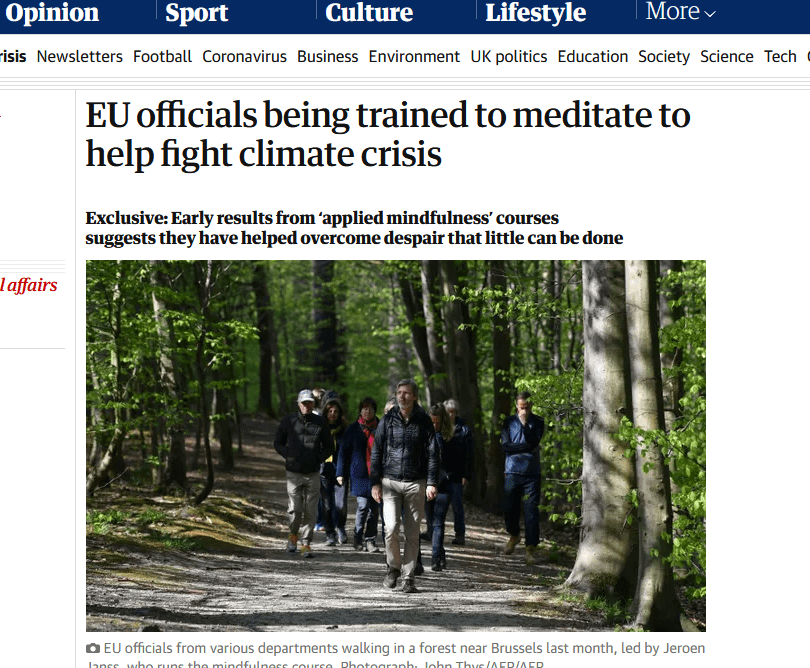
https://www.theguardian.com/world/2022/may/04/eu-bureaucrats-being-trained-meditate-help-fight-climate-crisis

On the 4th of May, the Guardian published an article describing the benefits of ‘applied mindfulness’ courses. However, many of the tropes observed in earlier mindfulness discussions were still prominent. Below is my reply to the Editor.

“I enjoyed the feature on EU officials learning to meditate published in The Guardian on the ย 4th of May. It’s hard to argue against any attempt to use the ‘potential of meditation to encourage lower-carbon lifestyles.’ But as a researcher documenting the scientific history of mindfulness, it would be remiss of me not to draw your attention to some problems with this article. So, if you permit, I’ll signpost some evidence that offers a more complete perspective of mindfulness than that normally seen in the UK media.

I’m a trained meditation neuroscientist, but my research changed direction in 2018ย  when I read a new scientific study called Mind the Hype.[1] Fifteen of the leading meditation scientists and clinicians reviewed the evidence supporting claims made for mindfulness. They found that: ‘Misinformation and poor methodology associated with past studies of mindfulness may lead public consumers to be harmed, misled, and disappointed.’ These claims appeared to run counter to much of the reported evidence and many of the media accounts I’d seen; I decided to take a closer look.

The published evidence (rather than the media hype) revealed that scientists such as Michael West had been warning against methodological problems in the research of medicalised meditation (of which mindfulness is part) since 1970.[2]ย  These warnings consistently appear in strategic reviews of meditation research. In the 1980s, Marguerite Malone and Michael Strube confirmed the presence of ‘spectacular’ claims based on limited experimental approaches.[3] The robust application of the scientific method to mindfulness experiments has continued to challenge promising but frequently unproven claims. The characterisation of criticisms of mindfulness using the trope of ‘McMindfulness’, ignores dozens, perhaps over a hundred systematic studies by credible mainstream scientists and academics.

Your article repeated claims about mindfulness-based cognitive therapy’s (MBCT) benefits. And while MBCT is based on a more reliable methodology, there are important and often undiscussed issues here. MBCT combines cognitive behavioural therapy (CBT) with mindfulness. Research has indicated that the clinical benefits of MBCT are comparable with CBT, leading critics to argue that removing mindfulness from MBCT does not alter its clinical effectiveness. As you mention, there is cross-party political support for mindfulness through the Mindfulness All-Party Parliamentary Group (MAPPG) at Westminster. Therefore, it is unfortunate that the 2015 MAPPG report failed to discuss many of the evidenced limitations in the science supporting mindfulness. Further many of the protagonists in this field appear unaware of the social policy agenda linking mindfulness to economic objectives through the concept of ‘mental capital’.

To describe mindfulness as ‘Buddhist inspired’ is problematic in my opinion. Jon Kabat-Zinn, the founder of mindfulness-based stress reduction (MBSR) described it as a ‘bridge’ between belief (Buddhism) and science, an improbable fusion of world views.[4] And while mindfulness is now a fragmented technology with over 30,000 studies in the academic databases, the scientific paradigm developed by Kabat-Zinn in the 1980s is present in much contemporary research.

I appreciate this is a complex area, and I have had the advantage of researching this field for many years. But New Scientist began to ask critical questions about the ‘hype’ behind mindfulness last year. So I’m sure many of your readers would be interested in a more balanced perspective on mindfulness research and practice.

Regards

Stephen Gene Morris”


[1] Nicholas T. Van Dam and others, ‘Mind the Hype: A Critical Evaluation and Prescriptive Agenda for Research on Mindfulness and Meditation’, Perspectives on Psychological Science, 13.1 (2018), 36โ€“61 <https://doi.org/10.1177/1745691617709589&gt;.

[2] Michael West, ‘Meditation.’, The British Journal of Psychiatryโ€ฏ: The Journal of Mental Science, 135.5 (1979), 457โ€“67 <https://doi.org/10.1192/bjp.135.5.457&gt;.

[3] Marguerite D. Malone and Michael J. Strube, ‘Meta-Analysis of Non-Medical Treatments for Chronic Pain’, Pain, 34.3 (1988), 231โ€“44 <https://doi.org/10.1016/0304-3959(88)90118-2&gt;.

[4] Jon Kabat-Zinn, ‘Some Reflections on the Origins of MBSR, Skillful Means, and the Trouble with Maps’, Contemporary Buddhism, 12.1 (2011), 281โ€“306 <https://doi.org/10.1080/14639947.2011.564844&gt;.