What Meditation Should You Choose?

The Most Important and Least Asked Question…

I’ve highlighted 100 of the most widely used forms of meditation below; however, please take a moment to read the explanation and context first.

At the start of my journey with meditation, I thought ‘meditation’ was just one thing, one practice, one method. But while, by definition, there is a general collection of behaviours we think of as ‘meditation’, the differences between practices can be unimaginable. Take the case of mindfulness meditation. In its original Buddhist form, it is a basic traditional practice directly connected to the spiritual path. There are, however, many forms of ‘mindfulness’ in different Buddhist traditions, some suitable for beginners, while others are regarded as advanced practices. Mindfulness meditation was reinvented by Western scientists as a form of medicalised therapy in the 1970s. We now have at least 50 different forms of mindfulness being used in Western clinical settings, each with a slightly different configuration that affects meditators in different ways. For almost all meditators, whether spiritual or secular, young or old, novice or experienced, the key issue when looking for a method is to be clear about your meditation goals and use a practice that can help you reach your objectives.

To learn more about the challenges and opportunities associated with the scientific appropriation of mindfulness, click here. To understand what the secularisation of meditation means to people practising meditation, read this article on the Mindtraining website.

I’ve catalogued over 500 distinct forms of meditation in my own research; the 100 listed below are among the most popular. For each method listed, there are dozens of variants. Some of those included have been scientifically validated, other techniques are unknown to psychology. Take these descriptions as relative and do some research before you commit to any meditation teacher or practice.

Core Meditation Techniques – Defining Practices

  1. Mindfulness Meditation โ€“ Split between traditional Buddhist and Western medicalised forms. Observing thoughts and sensations without judgment in the present moment.
  2. Focused Attention Meditation โ€“ Concentrating on a single object like breath, a candle, or a mantra.
  3. Open Monitoring Meditation โ€“ Maintaining awareness of all aspects of experience without fixation.
  4. Loving-Kindness (Metta) โ€“ Generating feelings of love and compassion for self and others.
  5. Vipassana โ€“ Insight-oriented observation of bodily sensations to develop self-awareness.
  6. Samatha โ€“ Calming the mind through focused attention, often on the breath.
  7. Zazen โ€“ Seated meditation from Zen Buddhism emphasising non-thinking and posture.
  8. Kundalini Meditation โ€“ Awakening energy at the base of the spine using breath, movement, and mantra.
  9. Transcendental Meditation (TM) โ€“ Using a personalised mantra to transcend thought.
  10. Mantra Meditation โ€“ Repeating sacred sounds or phrases to quiet the mind.

Yogic & Hindu Meditation Methods

  1. Yoga Nidra โ€“ Deep relaxation meditation conducted in a sleep-like state.
  2. Trataka โ€“ Gazing at a fixed point (e.g. candle flame) to develop concentration.
  3. Nada Yoga โ€“ Meditating on sound, either external or internal auditory experiences.
  4. Chakra Meditation โ€“ Focusing attention on energy centers to align body and mind.
  5. Tantra Meditation โ€“ Using ritual and visualization to integrate spiritual energy.
  6. Bhakti Meditation โ€“ Devotion-based meditation through prayer, chant, and surrender.
  7. Japa Meditation โ€“ Repetition of mantras using mala beads for counting.
  8. Raja Yoga Meditation โ€“ Combining ethical living, concentration, and absorption.
  9. Atma Vichara (Self-Inquiry) โ€“ Asking โ€œWho am I?โ€ to realize true self or consciousness.
  10. Sahaja Meditation โ€“ Effortless awareness focusing on spontaneous attention.

Buddhist Meditation Approaches

  1. Tonglen โ€“ Taking in suffering and breathing out compassion.
  2. Shamatha-Vipassana โ€“ Pairing calm abiding with profound insight.
  3. Walking Meditation โ€“ Practising mindfulness while moving slowly and deliberately.
  4. Dzogchen โ€“ Resting in the nature of mind, spontaneous presence.
  5. Mahamudra โ€“ Recognising awareness itself as the path and goal.
  6. Analytical Meditation โ€“ Reflecting intellectually to penetrate Buddhist teachings.
  7. Visualisation of Deities โ€“ Mentally constructing divine forms for transformation.
  8. Five Aggregates Meditation โ€“ Contemplating the components of personhood to dissolve illusion.
  9. Six Elements Meditation โ€“ Reflecting on earth, water, fire, air, space, and consciousness.
  10. Death Meditation (Maranasati) โ€“ Contemplating mortality to deepen presence.

Psychotherapeutic Meditation & Modern Adaptations

  1. Mindfulness-Based Stress Reduction (MBSR) โ€“ A Controversial clinical approach to managing stress through mindfulness. The dominant form favoured by health and social policy organisations and businesses.
  2. Mindfulness-Based Cognitive Therapy (MBCT) โ€“ Combines mindfulness with CBT to prevent depression relapse in limited cases.
  3. Acceptance and Commitment Meditation โ€“ Noticing thoughts while committing to values-led action.
  4. Body Scan Meditation โ€“ Progressive awareness of bodily sensations.
  5. Somatic Experiencing Meditation โ€“ Tuning into internal body signals to release trauma.
  6. ACT-Based Present Moment Meditation โ€“ Grounding in sensory awareness and defusion techniques.
  7. Dialectical Behavior Therapy (DBT) Mindfulness โ€“ Cultivating nonjudgmental present awareness in emotion regulation.
  8. Compassion-Focused Meditation โ€“ Generating warmth toward self and others to counter shame.
  9. Interpersonal Mindfulness โ€“ Bringing awareness to real-time relational interaction.
  10. Reflective Meditation โ€“ Allowing thoughts to arise while exploring emotional resonances.

Esoteric Meditation Methods & Energy Based Practices

  1. Qi Gong Meditation โ€“ Coordinating breath, movement, and intention to cultivate life energy.
  2. Taoist Inner Smile โ€“ Sending smiling energy to internal organs to promote healing.
  3. Astral Projection Meditation โ€“ Guiding consciousness beyond the physical body.
  4. Crystal Meditation โ€“ Using crystals to amplify specific energies and intentions.
  5. Light Meditation โ€“ Visualising inner or external light for healing or illumination.
  6. Reiki Meditation โ€“ Channelling universal energy through hands or mind for self-care.
  7. Kabbalistic Meditation โ€“ Contemplating Hebrew letters, names of God, or Tree of Life.
  8. Merkaba Activation Meditation โ€“ Awakening geometric energy fields for ascension.
  9. Third Eye Meditation โ€“ Focusing between the brows to develop intuitive insight.
  10. Aura Cleansing Meditation โ€“ Visualising the purification of personal energy fields.

Technology Enhanced Meditation Techniques

  1. Binaural Beats Meditation โ€“ Using audio frequencies to synchronise brainwaves.
  2. Guided Imagery Meditation โ€“ Listening to narrated journeys to evoke relaxation or insight.
  3. VR Meditation โ€“ Immersing oneself in virtual landscapes to deepen sensory engagement.
  4. App-Based Mindfulness โ€“ Practising structured sessions via digital platforms.
  5. Neurofeedback Meditation โ€“ Real-time monitoring to enhance brainwave states.
  6. Sound Bath Meditation โ€“ Experiencing healing vibrations through instruments like gongs or singing bowls.
  7. AI-Guided Meditation โ€“ Interactive sessions with responsive virtual facilitators.
  8. Subliminal Audio Meditation โ€“ Listening to layered affirmations below the conscious threshold.
  9. Digital Detox Meditation โ€“ Mindfully disengaging from screens and digital noise.
  10. Eye Mask Meditation โ€“ Sensory deprivation to intensify inward attention.

Cultural Based & Devotional Meditation

  1. Christian Contemplative Prayer โ€“ Meditative silence in Godโ€™s presence.
  2. Hesychasm โ€“ Repetitive Jesus Prayer to enter inner stillness.
  3. Islamic Dhikr Meditation โ€“ Repetitive remembrance of divine names.
  4. Sufi Whirling Meditation โ€“ Physical rotation to induce spiritual ecstasy.
  5. Jewish Hitbodedut โ€“ Speaking spontaneously with God for inner clarity.
  6. Native American Vision Quest โ€“ Solitary reflection in nature to seek guidance.
  7. Shamanic Drumming Meditation โ€“ Entering altered states through rhythmic beat.
  8. African Ubuntu Meditation โ€“ Reflecting on interconnectedness and community spirit.
  9. Hawaiian Hoโ€˜oponopono โ€“ Repeating forgiveness phrases for reconciliation.
  10. Vedic Fire Ritual Meditation โ€“ Meditating on the flame as a transformation symbol.

Specialized Meditation & Hybrid Techniques

  1. Sleep Meditation โ€“ Relaxation practices to support restful sleep.
  2. Gratitude Meditation โ€“ Focusing on positive experiences and appreciation.
  3. Goal Visualization Meditation โ€“ Envisioning desired outcomes to prime action.
  4. Stoic Reflection Meditation โ€“ Contemplating virtue, mortality, and control.
  5. Emotional Release Meditation โ€“ Allowing feelings to arise and dissolve mindfully.
  6. Productivity Meditation โ€“ Grounding and setting intentions before focused work.
  7. Decision-Making Meditation โ€“ Clarifying values and options through reflection.
  8. Micro-Meditation โ€“ Quick resets throughout the day for clarity.
  9. Habit Formation Meditation โ€“ Embedding new routines through intentional repetition.
  10. Creative Flow Meditation โ€“ Tapping intuition to support artistic expression.

Nature Based Meditation – Connected

  1. Forest Bathing (Shinrin-Yoku) โ€“ Immersing attention in natural environments.
  2. Sun Gazing Meditation โ€“ Safely gazing near sunrise/sunset for energy absorption.
  3. Ocean Meditation โ€“ Synchronising breath with wave rhythms.
  4. Mountain Meditation โ€“ Visualising grounded presence and strength.
  5. Rain Meditation โ€“ Listening to or imagining rainfall to induce calm.
  6. Earth Element Meditation โ€“ Connecting with soil and grounded energy.
  7. Sky Meditation โ€“ Embracing expansive awareness through open sky imagery.
  8. Animal Observation Meditation โ€“ Mindfully watching animal behaviour to mirror presence.
  9. Campfire Contemplation โ€“ Reflecting in silence near flickering flames.
  10. Seasons Meditation โ€“ Noting changes in internal and external cycles.

Meditation for Cognitive Enhancement

  1. Meta-Cognition Meditation โ€“ Observing oneโ€™s thinking patterns consciously.
  2. Neurosculpting Meditation โ€“ Rewiring thought through mindfulness and neuroplasticity.
  3. Synesthesia Meditation โ€“ Exploring cross-sensory imaginative states.
  4. Reverse Engineering Meditation โ€“ Analysing actions to understand their motivations.
  5. Memory Palace Meditation โ€“ Visualising spatial locations to encode information.
  6. Intuition Calibration Meditation โ€“ Fine-tuning inner signals for decision-making.
  7. Language Awareness Meditation โ€“ Observing mental language formation.
  8. Time Perception Meditation โ€“ Altering awareness.
  9. Mind Training Meditation โ€“ Changing brain function and structure.
  10. Emotional Regulation Practice โ€“ Mediating emotions with the Executive Function.

The Scientific History of Mindfulness: Unveiling the Paradox

The findings of a new four-year investigation provide comprehensive insights into how mindfulness developed and its current status. Despite significant scientific concerns, the research illustrates how mindfulness was promoted as an influential health and well-being intervention. The least known but most controversial aspect of the ‘mindfulness revolution’ is the reconfiguring of spiritual practices as tools for social and economic control.

The latest in-depth research explains why scientists and clinicians are rethinking the idea that mindfulness is a universal mental health treatment.

The most comprehensive scientific review of the popular Western form of mindfulness meditation, medicalised mindfulness, has just been completed. The Scientific History of Mindfulness (SHoM) describes the creation of Mindfulness-Based Stress Reduction (MBSR) in the late 1970s and charts the development of hundreds of Mindfulness-Based Interventions (MBIs) in the following decades. MBSR was part of a movement that sought to capture the health benefits of spiritual practices. Uniquely, MBSR was presented as a health intervention that ‘bridged’ scientific and religious knowledge. In 2004, Mindfulness-Based Cognitive Therapy (MBCT) was endorsed for clinical use in the UK, increasing public and scientific confidence in medicalised meditation. By 2010, mindfulness stakeholders declared that a ‘mindfulness revolution’, which would profoundly impact society, was taking place.

Politicians and health policy agents enthusiastically promoted the benefits of mindfulness, particularly in the UK. The hype also bled into social policy, where in 2014, mindfulness was presented as a tool for social control and improved economic performance. Under the concept of ‘mental capital,’ the rollout of mindfulness in UK schools was made a priority.

Dr Stephen Gene Morris

By 2018, many meditation scientists were criticising the experimental findings on which mindfulness’s success had been built. Over the decades, reviews of meditation experiments have frequently highlighted limitations in mindfulness research. However, a tendency among some scientists and policymakers to ignore negative scientific evidence established misunderstandings about mindfulness and the benefits it could bring to practitioners and consumers.

Dr Stephen Gene Morris

The SHoM describes how reducing Buddhist meditation methods to Western psychological interventions created ontological conflicts. These conflicts helped sustain paradoxical positions where experimental studies were regarded as both reliable and unreliable. This permitted mindfulness stakeholders to pick and choose the ‘science’ supporting the use and deployment of MBIs. Mindfulness became widely accepted after 2000 despite its known weaknesses, which is a significant concern for scientific and clinical communities and their funders. As a case study, the history of mindfulness offers evidence of substantial problems in how knowledge is created and disseminated in the psychological sciences. Further, the review highlights how overstating scientific findings based on preliminary research can lead to problems in other domains, such as health care and social policy.

A clear understanding of the mindfulness paradox and research crisis offers new perspectives on the Western understanding of meditation. There is a pressing need to reevaluate and rationalise mindfulness research, a problem that SHoM addresses directly. This careful transdisciplinary investigation has also highlighted systemic issues in the areas where scientific and non-scientific knowledge intersect. In particular, scientists and scholars have often explained religious thought and practice empirically, subordinating their actual nature and obscuring their curative potential.

Dr Stephen Gene Morris

One obvious conclusion from the SHoM is that a failure to establish reliable scientific foundations has been very costly. Thousands of peer-reviewed papers repeated the same experimental limitations, and unreliable ‘scientific’ narratives about religion and meditation have entered popular discourses. Today, a significant effort by the contemplative science community is needed to restore the reputation of meditation research and establish meaningful boundaries between scientific and religious knowledge systems.

(If you’re looking to understand why science has failed to understand religion, click here. The Legacy of Mindfulness: Has Science Failed to Understand Buddhistย Meditation?)

Notes:

1 The Scientific History of Mindfulness: 1938 to 2020

Morris, Stephen Gene (2024) The Scientific History of Mindfulness: 1938 to 2020. University of Kent,. (doi:10.22024/UniKent/01.02.106240) (KAR id:106240). https://kar.kent.ac.uk/106240/

2. Dr Stephen Gene Morris is a Consultant in Applied Neuropsychology and has spent over 25 years understanding knowledge at the intersections of science and belief. In June 2024, he completed this PhD thesis, funded by a Scholarship from the University of Kent.

3. The SHoM will be officially launched on the 30th of September 2024. Press releases and summaries of findings will be distributed to relevant media outlets. To register for an electronic copy of the press pack, complete the contact form here with ‘Press Pack’. To contact Stephen directly on matters linked to

Do we need more balance when reporting mindfulness research?

As mindfulness heads towards another incarnation, unresolved issues linked to its scientific reliability remain unresolved.

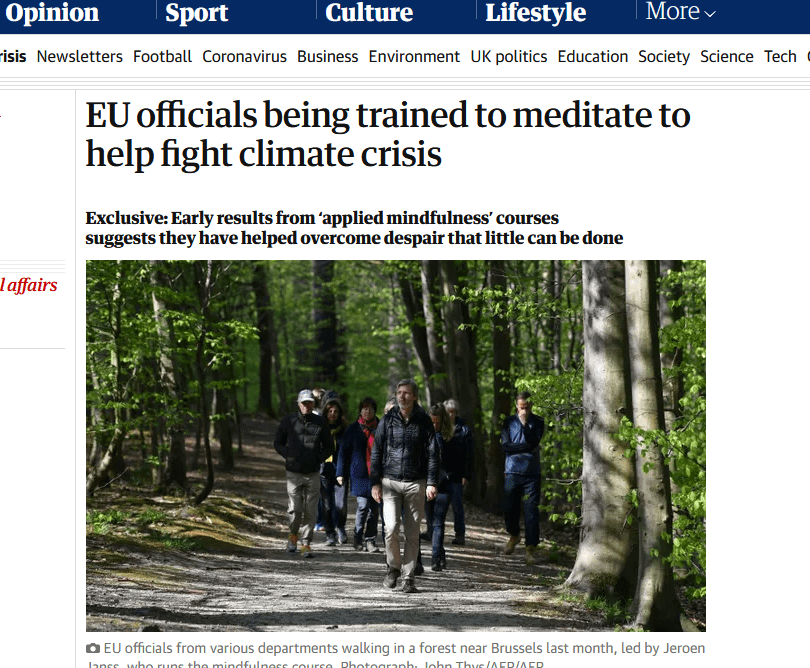
https://www.theguardian.com/world/2022/may/04/eu-bureaucrats-being-trained-meditate-help-fight-climate-crisis

On the 4th of May, the Guardian published an article describing the benefits of ‘applied mindfulness’ courses. However, many of the tropes observed in earlier mindfulness discussions were still prominent. Below is my reply to the Editor.

“I enjoyed the feature on EU officials learning to meditate published in The Guardian on the ย 4th of May. It’s hard to argue against any attempt to use the ‘potential of meditation to encourage lower-carbon lifestyles.’ But as a researcher documenting the scientific history of mindfulness, it would be remiss of me not to draw your attention to some problems with this article. So, if you permit, I’ll signpost some evidence that offers a more complete perspective of mindfulness than that normally seen in the UK media.

I’m a trained meditation neuroscientist, but my research changed direction in 2018ย  when I read a new scientific study called Mind the Hype.[1] Fifteen of the leading meditation scientists and clinicians reviewed the evidence supporting claims made for mindfulness. They found that: ‘Misinformation and poor methodology associated with past studies of mindfulness may lead public consumers to be harmed, misled, and disappointed.’ These claims appeared to run counter to much of the reported evidence and many of the media accounts I’d seen; I decided to take a closer look.

The published evidence (rather than the media hype) revealed that scientists such as Michael West had been warning against methodological problems in the research of medicalised meditation (of which mindfulness is part) since 1970.[2]ย  These warnings consistently appear in strategic reviews of meditation research. In the 1980s, Marguerite Malone and Michael Strube confirmed the presence of ‘spectacular’ claims based on limited experimental approaches.[3] The robust application of the scientific method to mindfulness experiments has continued to challenge promising but frequently unproven claims. The characterisation of criticisms of mindfulness using the trope of ‘McMindfulness’, ignores dozens, perhaps over a hundred systematic studies by credible mainstream scientists and academics.

Your article repeated claims about mindfulness-based cognitive therapy’s (MBCT) benefits. And while MBCT is based on a more reliable methodology, there are important and often undiscussed issues here. MBCT combines cognitive behavioural therapy (CBT) with mindfulness. Research has indicated that the clinical benefits of MBCT are comparable with CBT, leading critics to argue that removing mindfulness from MBCT does not alter its clinical effectiveness. As you mention, there is cross-party political support for mindfulness through the Mindfulness All-Party Parliamentary Group (MAPPG) at Westminster. Therefore, it is unfortunate that the 2015 MAPPG report failed to discuss many of the evidenced limitations in the science supporting mindfulness. Further many of the protagonists in this field appear unaware of the social policy agenda linking mindfulness to economic objectives through the concept of ‘mental capital’.

To describe mindfulness as ‘Buddhist inspired’ is problematic in my opinion. Jon Kabat-Zinn, the founder of mindfulness-based stress reduction (MBSR) described it as a ‘bridge’ between belief (Buddhism) and science, an improbable fusion of world views.[4] And while mindfulness is now a fragmented technology with over 30,000 studies in the academic databases, the scientific paradigm developed by Kabat-Zinn in the 1980s is present in much contemporary research.

I appreciate this is a complex area, and I have had the advantage of researching this field for many years. But New Scientist began to ask critical questions about the ‘hype’ behind mindfulness last year. So I’m sure many of your readers would be interested in a more balanced perspective on mindfulness research and practice.

Regards

Stephen Gene Morris”


[1] Nicholas T. Van Dam and others, ‘Mind the Hype: A Critical Evaluation and Prescriptive Agenda for Research on Mindfulness and Meditation’, Perspectives on Psychological Science, 13.1 (2018), 36โ€“61 <https://doi.org/10.1177/1745691617709589&gt;.

[2] Michael West, ‘Meditation.’, The British Journal of Psychiatryโ€ฏ: The Journal of Mental Science, 135.5 (1979), 457โ€“67 <https://doi.org/10.1192/bjp.135.5.457&gt;.

[3] Marguerite D. Malone and Michael J. Strube, ‘Meta-Analysis of Non-Medical Treatments for Chronic Pain’, Pain, 34.3 (1988), 231โ€“44 <https://doi.org/10.1016/0304-3959(88)90118-2&gt;.

[4] Jon Kabat-Zinn, ‘Some Reflections on the Origins of MBSR, Skillful Means, and the Trouble with Maps’, Contemporary Buddhism, 12.1 (2011), 281โ€“306 <https://doi.org/10.1080/14639947.2011.564844&gt;.