The Role of Refuge in Mindfulness Practice

Refuge – A Buddhist concept missed by meditation scientists

Why the Absence of Refuge Undermines Western Mindfulness

Western psychology has embraced mindfulness as a panacea, an intervention linked to reduced stress, treating clinical depression, and even improving cognitive function. However, despite its popularity, the lack of robust evidence for its clinical benefits has led many practitioners and scientists to speculate on why the presumed effects of traditional meditation have not been translated into clinical practice.

One of the key elements of traditional meditation, often missing from Western mindfulness, is the concept of Refuge. Refuge is a foundational concept in many meditation traditions, orienting the practitioner’s mind within a broader spiritual and relational framework. In Buddhist meditation, mindfulness is not a standalone technique; it arises within the context of the Refuge in the Buddha, the Dharma (the Buddha’s teachings), and the Sangha (the community of practitioners). Taking Refuge in these three elements provides an existential grounding and generates confidence in the meditation practice.

The precise nature of Refuge can vary according to the practitioner’s experience and Buddhist school within which the meditation is practised. However, in almost every case, it provides a mindset that serves as a stable base for meditation. Without Refuge, the act of mindfulness risks becoming an attentional exercise, uncoupled from many of the mental processes present in Buddhist meditation. There is growing unrest among some practitioner-scientists about the decontextualisation of mindfulness from traditional forms of meditation; that is, in Westernising and commodifying meditation, the benefits of traditional practice may have been lost.

Segall (2001) argues that when stripped of its Buddhist theoretical frameworks, Western mindfulness loses its transformative potential, becoming susceptible to institutional agendas and materialist objectives.1 Khong (2012) also highlights the limitations of detaching mindfulness from its Buddhist theoretical frameworks.2

Refuge in mindfulness practice
Refuge – The foundation of mindfulness practice

The absence of Refuge is likely to impact cognitive processes and mechanisms able to mediate wellbeing in several ways:

Firstly, a lack of existential orientation: Refuge provides a holistic and spiritual telos, enabling a sense of direction towards awakening and compassion. Without these processes, Western mindfulness tends to privilege mundane, dualistic awareness, overlooking its transcendent and ethical purposes.

Isolation and individualism: The concept of Sangha offers a broader sense of community and collective purpose. The tendency of mindfulness to focus on individual, solitary needs disrupts the balance between self and other, which is central to most nondual Buddhist meditation.

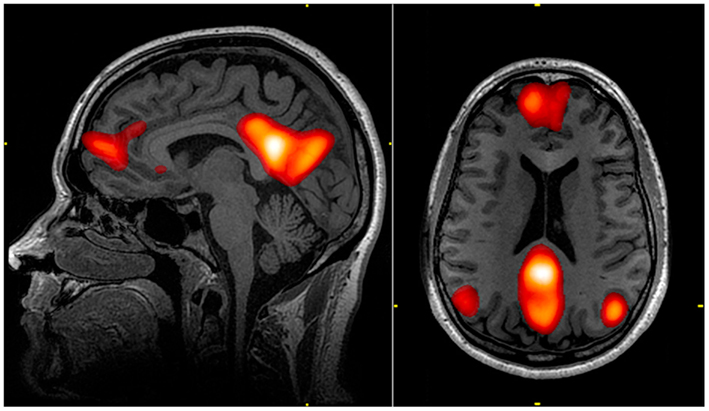
Cognitive reductionism: Buddhist Refuge engages the whole person in context, emotionally, ethically and spiritually. Western clinical meditation methods typically privilege the extrinsic brain network, overlooking mental processes rooted solely in the intrinsic system.

Commodification: The absence of Refuge enables the reconfiguring of mindfulness as a health product, enabling the technique to be co-opted by corporations and institutions, including the military. This shift reshapes the mental processes used in meditation, reinforcing systemic stressors rather than challenging them.

Refuge and the commidification of meditation
The commodification of meditation may have limited its health benefits

The commodification of meditation may have limited its health benefits compared to both traditional practices and scientifically validated interventions. Taking the bigger picture into account, these concerns are the tip of an iceberg.

There is growing disquiet about the cost of the ‘mindfulness experiment’. Estimates of the global bill for the scientific investigation of mindfulness from the 1970s to date range between £1 bn and £5 bn. Several billion more represent the cost of the proliferation of the technique and the investment in training teachers and providing wider support materials. Most scientists working in this field would agree, practising mindfulness brings a degree of relaxation equivalent to and sometimes slightly greater than hundreds of other mundane human behaviours, like art or gardening.

Refuge is a concept rooted in a dual/nondual tension. An issue that is ignored by almost all meditation scientists. The psychological sciences generally present consciousness as a dualistic enterprise. For psychologists, even a preliminary understanding of Buddhism’s theoretical foundations requires a reimagining of mindfulness to access the health benefits of traditional meditation methods. On the balance of evidence, Western versions of traditional meditation are oversimplified and entirely uncoupled from the original curative network that so attracted Western academics from the 1930s onward.

The results of 90 years of meditation research have demonstrated that focusing solely on technique has been a significant error. Integrating elements of Refuge, even from a secular perspective, is likely to restore depth and direction to meditation methods. For example, a starting point for the reintroduction of Refuge could include: The use of transdisciplinary research to establish the cognitive components present in traditional Refuge and to develop the relevant theoretical framework. Encouraging practitioners to understand the concept of Refuge and apply the theoretical framework to their own conditions. Framing mindfulness within a broader narrative of healing, ethical living and growth. Developing secular practices that can cultivate interdependence, compassion and shared community.

Khong has convincingly argued that the maturation of Western mindfulness requires a return to its roots, not to replicate religious forms, but to realign the Westernised practice with the original mental processes that may hold robust potential rather than the marginal benefits that most reliable, optimistic studies present.

The concept of Refuge reminds us that dualist presence alone is not transformative, not on the spiritual nor the clinical levels.  Its absence from Western practices, even in a secular form, evidences the current limitations in how psychology understands and engages with mindtraining originating in non-scientific domains.

References:

Khong, B. S. L. (2021). Revisiting and Re-Envisoning Mindfulness: Buddhist and Contemporary Perspectives. The Humanistic Psychologist, 49(1), 3 -18.  

Segall, S. Z. (2021). Mindfulness In and Out of Context of Western Buddhist Modernism. The Humanistic Psychologist, 49(1), 40-55.

Why the ‘Mindfulness Revolution’ Failed: Understanding the Boundaries Between Science and Religion

Part 1: Going Back to Basics: Dual and Nondual

Perhaps as much as $5 bn has been spent by scientists investigating the benefits of meditation and mindfulness over the last 50 years. Over 30,000 scholarly studies, primarily scientific, have been published in the peer-reviewed literature. In 2010, mindfulness enthusiasts and entrepreneurs announced the arrival of a new age of understanding through the ‘mindfulness revolution’. However, credible reviews of meditation research demonstrate that Western scientific understanding of mindfulness practices is, at best, preliminary. Further, almost no progress has been made in understanding what traditional Buddhist forms of meditation are, let alone how they work on the psychological level.

Scientists and clinicians initially appropriated religious meditation methods because of evidence that, in their original forms, they could provide profound health benefits. In the 1950s, long before the ‘Mindfulness Revolution’, psychologists were using Buddhist meditation to treat intractable mental health conditions. Since the early 1980s, Western scientists and clinicians developed hundreds of new versions of mindfulness. The best of these diverse forms can provide a degree of relaxation, often equivalent to or slightly more significant than a placebo effect. Unfortunately, the hope that mindfulness could be a powerful technique to treat and cure problematic mental health has evaporated.

Scientists gambling on a mindfulness miracle
Has the £5 bn mindfulness gamble paid off?

Today, the scientific understanding of mindfulness is fragmented, with growing scepticism about its benefits from many sections of society. Mindfulness is most frequently seen as a ‘welbeing’ intervention and is often taught by trained volunteers rather than psychologists or therapists. However, hyped claims of mindfulness’s benefits, supported by big business, politicians, and social policy, have ensured mindfulness’s popularity and longevity. Mindfulness has even been earmarked as a tool to keep people working and consuming when their material conditions are being eroded, a dramatic departure from the original purpose of Buddhist meditation.

The scientific history of mindfulness raises many problems. The most crucial issue is to consider how scientific engagement with religious meditation led to less rather than more understanding of the practices. By researching this question, we have started to gain much more insight into the fundamental nature of Buddhist thought and practice and the problems that arise when the boundaries between religion and science are altered.

No one factor can explain why thousands of scientists, spending a vast fortune in research funding, have made so little progress. Many studies have been critical of the scientific investigation of meditation. However, they often see the solution to the ‘mindfulness crisis’ as producing more, better-quality experiments. Fortunately, several academics have begun to question the nature of the relationship between science and religion, especially Buddhism.

In essence, the scientific method is part of a dualistic knowledge system based on certain principles, such as empiricism (all ‘true’ knowledge comes from sensory experience and empirical evidence) and reductionism (complex behaviours can be understood by isolating and understanding individual elements of the behaviours). Buddhism is divided into very different knowledge systems, most of which are explicitly and implicitly nondual. For example, Mahayana Buddhism is set in a theoretical framework where emptiness (all things are empty of intrinsic nature or existence) is held to be the underlying nature of reality. So, in any meaningful way, experimental psychology cannot understand Buddhism because they do not share the same frames of reference (ontology and epistemology). Psychology can see the effect of meditation but is unable to understand what it is.

Just to be clear, psychological science can measure the psychological and physiological effects of meditation. But it cannot currently understand what spiritual meditators do, the underlying cognitive processes, or what their spiritual goals are. Similarly a spiritual practice is unable to calculate the speed of light or the atomic weight of an element. By definition, different knowledge systems are incompatible because they address different human needs in different ways.

Dr Stephen Gene Morris

The second part of this article can be found here.

What is the Nondual View, and Why is it Important in Meditation?

A startling finding emerging from the groundbreaking Scientific History of Mindfulness is the failure of Western science to recognise the nondual nature of traditional forms of meditation. Experienced meditation practitioners may have been taught about the nondual view or nondual meditation methods, which are pivotal to many meditation traditions. However, most Westerners’ consciousness is dominated by explicitly dualistic frameworks. The ability of people rooted in a dualistic awareness, including scientists, to understand a nondual worldview is problematic, even if they have received instruction and training. One possible explanation for this problem is the concept of incommensurability found in Thomas Kuhn’s writings. A controversial term, incommensurability, describes how changing to alternative ways of knowing is problematic once we have been trained in a particular understanding of the world. Further, someone who is schooled in a specific understanding may not even know that they have been cognitively conditioned to see the world from one particular dualistic perspective.

A characteristic of the dualistic mind is that it believes its conscious experience is an objective reality. This misunderstanding is experienced by Western meditation scholars and scientists, even today. Many highly intelligent and well-intentioned academics make claims about the nature of traditional forms of meditation from a dualistic perspective without ever having recognised the role of nonduality in meditation methods. This problem is not restricted to modern materialistic societies but is present wherever people foster a ‘belief in self’ as an objective reality. Thus, many traditional meditation students train for years, or even decades, to appreciate that their consciousness can be either dual, nondual, or even an integration of the two.

Typically, humans flit between dual and nondual forms of consciousness without knowing or detecting the difference.  In this brief introduction, the critical thing to remember is that we all have access to dual and nondual ways of knowing; both are integral to the human experience. However, it is highly problematic to recognise and then cultivate a consistent nondual view without training and guidance. It is not possible to provide a comprehensive explanation of dual or nondual consciousness in this article, but I have written about these issues elsewhere.  So here, I will attempt to use simplified approximations to introduce this subject.

In a typical Western materialistic society like the UK today, most people spend significant time in dualistic consciousness.  We could characterise the dualistic state in many ways; as a starting point, let us simply regard it as the point of view where one believes, as truth, the conscious and subconscious impulses generated by our brain.  

We can all find examples of our irrational thoughts and baseless concerns that we recognise as meaningless. However, many of us accept unfounded opinions and erroneous perceptions as ‘reality’. While our thoughts and ideas often seem meaningful, the views of others can seem meaningless or even ridiculous. Without nondual awareness, our identity is partly made up of fabricated constructs with no reality other than what we attribute to them; I’d suggest this is the dominance of emotion over reasoning, although it is obviously an oversimplification. So, for example, thinking that others are responsible for your mental state (you make me angry) is usually an expression of dualism, as is the default belief that our wishes and goals are somehow more important than the wishes and goals of others. 

By contrast, a nondual view distinguishes between reliable mental phenomena and transient, unreliable thoughts and feelings. Once a stable and systematic nondual view is achieved, we can establish relative freedom in thinking, speaking and acting. This freedom is often associated with the happiness and stability observed in nondual practitioners. So, from a nondual perspective, we make the presumption that the thoughts and feelings of others may be just as important and meaningful as ours. A note of caution; the nondual view is typically achieved by abandoning limiting concepts, an exercise that usually requires a significant amount of time, effort and training. I will stop the preliminary definitions here for now and briefly discuss what these concepts mean for meditation practice.

This image has an empty alt attribute; its file name is pexels-photo-7958245.jpeg

In traditional meditation, people often begin at the beginning; if they have a reliable teacher and methods and are diligent, they can progress.  However, until a practitioner realises which mental phenomena arising in their consciousness are transient and meaningless, all meditation can be seen as relative. That means your practice is relative to your mental state and other causes and conditions.  A practitioner with some modest experience of the nondual should be able to transcend belief in mundane phenomena, knowing their relative unimportance.  That is not to say that a nondual practitioner may have arrived at a transcendent mental state; it is simply that they understand the limitations of their own worldview.  That, in a nutshell, is my view of why the nondual is essential to progress beyond a preliminary stage in meditation practice.  Without nondual awareness, the inner world of our consciousness remains uncertain. While much Buddhist meditation is not explicitly nondual, it all, by its very nature, increases the ability of the student to understand nonduality. Nonduality is a central pillar in many spiritual and philosophical traditions, but it is mainly invisible to the psychological sciences; I wonder why…?

The Legacy of Mindfulness: Has Science Failed to Understand Buddhist Meditation?

Western forms of mindfulness were based on ‘imaginaries’ of Buddhist thought and practice. This problem has increased uncertainty over the mindfulness concept. However, by translating and reducing nondual religious practices to dualistic scientific ideas, the actual healing potential of traditional meditation may have been misunderstood or overlooked.

The Missed Opportunity of Mindfulness: How Science Failed to Understand Buddhist Meditation

Has science missed the point of meditation?

Credible challenges to the reliability of mindfulness research have led to many attempts to explain how Mindfulness-Based Stress Reduction (MBSR) and Mindfulness-Based Interventions (MBIs) developed. In particular, how mindfulness was adopted by health and social policy in the UK ahead of robust evidence for its benefits. Originally, MBSR was promoted as a fusion or bridge between Buddhist and scientific knowledge. Although few scientific studies repeated this trope, it has been influential in giving MBSR spiritual authority to support preliminary scientific claims. One of the most important reviews of the ‘bridging hypothesis’ was published in 2006. Mechanisms of Mindfulness was a paper by Shauna Shapiro and others for the Journal of Clinical Psychology and illustrates major problems in how science understands and treats religion.1

MBSR was a paradigmatic concept that set the trajectory for many of the 30,000 peer-reviewed mindfulness studies published since 1981.2 Psychology can easily measure the empirical effects of meditation, changes to heart rate, blood pressure, and oxygen consumption, for example. However, research has illustrated that rather than ‘bridge’ science and Buddhism, mindfulness researchers failed to establish a coherent theoretical framework from either perspective. The idea that MBSR did not reflect Buddhist thought and practice is not new; dozens of academic papers have sought to explain what is missing from the mindfulness paradigm. Of these Mechanisms of Mindfulness may illustrate the profound limitations in how science understands Buddhist thought and practice.

Meditate without intention or compassion.

The first point to make is that Mechanisms of Mindfulness took a favourable view of mindfulness’s potential health benefits; it was not a ‘critical’ challenge.

Over the past 20 years, the majority of research has focused on clinical intervention studies to evaluate the efficacy of mindfulness-based interventions such as the Mindfulness Based Stress Reduction (MBSR) program. This line of research has primarily addressed the first order question “Are mindfulness-based interventions effective?” These studies have led to promising data suggesting that MBSR is an effective intervention for treatment of both psychological and physical symptoms. p. 374

However, the main issue the paper raised is that MBSR created a conceptual vacuum in which treatment was delivered. That is, in the previous quarter of a century, mindfulness was being used without a clear scientific understanding of what it was or how it worked.

However, an equally important direction for future research is to address the second order question“How do mindfulness-based interventions actually work?” p.374

This uncertainty confirms that MBSR was not established using scientific or Buddhist rationales. However, Shapiro and her co-authors went further, claiming that key elements of Buddhist mindfulness (intention and compassion) were removed in the creation of the Western versions of the practice:

When Western psychology attempted to extract the essence of mindfulness practice from its original religious/cultural roots, we lost, to some extent, the aspect of intention, which for Buddhism was enlightenment and compassion for all beings. p. 375

Surprisingly, MBSR lacked the foundational elements, concepts, and methods of the Buddhist traditions it claimed to have had congruence with. When researchers pointed out these limitations, some mindfulness advocates, such as Jon Kabat-Zinn, doubled down on the unevidenced claims that MBSR reflected Buddhist values. Ignoring the criticisms of Buddhist scholars, Kabat-Zinn suggested his writings had synthesized, to some extent, the Buddha’s wisdom:

My intention and hope was that the book might embody to whatever degree possible the dharma essence of the Buddha’s teachings put into action and made accessible to mainstream Americans facing stress, pain, and illness. p. 282. 3

Despite the controversial nature of such a statement, the idea that MBSR and MBIs reflected Buddhist practices persisted. The failure of the scientific community to push back against unevidenced claims of Buddhist congruence was a major contribution to the crisis in mindfulness research. Lacking a stable theoretical framework, mindfulness was neither ‘scientific’ nor ‘Buddhist’. It was used pragmatically to demonstrate correlations between meditation and health rather than explain how it worked.4 Criticisms of the scientific quality of mindfulness research are widespread. The main issue raised here is the freedom with which religious thought and practice is presented in peer-reviewed literature.

By making unevidenced claims about Buddhist mindfulness, MBSR and MBIs were built on theoretical uncertainty. Perhaps even more problematic is the ease with which Buddhist thought and practice were adapted and misrepresented in the search for new health interventions. There are important issues here about the subordination of religion by science, which can lead to misunderstanding in the wider society. However, the great loss is that by manufacturing an imaginary of mindfulness rather than developing a comprehensive understanding, we know very little about the benefits of traditional forms of meditation. Most Buddhist meditation methods tend to a nondual view, while science is essentially dualistic. In reinventing meditation through a dualistic lens, the richness and potential benefits of nondual meditation have been removed from contemporary practices.


References

  1. Shapiro, Shauna L., Linda E. Carlson, John A. Astin, and Benedict Freedman. “Mechanisms of mindfulness.” Journal of clinical psychology 62, no. 3 (2006): 373-386.
  2. Morris, Stephen Gene. “The Scientific History of Mindfulness: 1938 to 2020.” PhD diss., University of Kent,, 2024. https://kar.kent.ac.uk/106240/
  3. Kabat-Zinn, Jon. “Some reflections on the origins of MBSR, skillful means, and the trouble with maps.” In Mindfulness, pp. 281-306. Routledge, 2013.
  4. Van Dam, Nicholas T., Marieke K. Van Vugt, David R. Vago, Laura Schmalzl, Clifford D. Saron, Andrew Olendzki, Ted Meissner et al. “Mind the hype: A critical evaluation and prescriptive agenda for research on mindfulness and meditation.” Perspectives on psychological science 13, no. 1 (2018): 36-61.

Nonduality and its central role to understanding meditation

The problem in talking about the concept of nonduality is that it is everywhere, all the time, but it is rarely recognised or understood.

Nondual understanding, the key to understanding meditation
Nonduality, the foundational principle of Buddhist meditation methods

(Follow this link if you are looking for the scientific explanation of nonduality, meditation and agenda for change.)

Where to begin? Where to begin when there is no beginning? To merely approach the concept of nonduality, several volumes of definitions, meanings and precedents could be used to establish the common ground required for a meaningful introduction. Consider that in traditional training systems, an ‘introduction’ to nonduality can comprise a decade or more of study and meditation. Even then an intellectual understanding might not be achieved, and a genuine experiential appreciation is even less likely. But despite the challenges,  I’m going to attempt to outline a basic framework illustrating the inseparability of nonduality and Buddhist meditation.

library high angle photro

From the Western academic standpoint, there are several ways of approaching nonduality, including the use of art, contemplative science, neuroscience, philosophy, psychology, semiotics and more.1 However, as this is a discussion of duality and nonduality in contemplative science, I can try a short-cut and align these thoughts to theoretical frameworks from traditional meditation systems. Crucially these established understandings have stable ontologies with reliable supporting and supportive epistemologies. Such theoretical frameworks can be found throughout traditional meditation schools, but are explicitly taught in nondual approaches such as Dzogchen and Mahamudra.2 I disagree with Capra’s generalisations about the shared world view of Eastern mystical traditions.3 But I take his point that there are fundamental conflicts between positivist and mystical understandings of mind and matter. This is not to give the first or last word on nonduality to any tradition, school or sect. Put simply, the tension between duality and nonduality is just an elegant way of describing the conscious experience of humans. However, some mystical traditions have established literary and oral traditions explaining the nature of explicit nonduality and the methods that may be used to establish nondual awareness (NDA).

As most forms of meditation shape the cognitive processes underpinning conscious experience, they can be considered as tools able to influence our concepts of duality-nonduality. However, a point of clarification is required, everything we think, say or do also exerts a force upon our lived experience. The difference between meditation and everyday experience is that meditation can be designed to systematically augment our access to NDA. So when we talk about meditation in a traditional context, nonduality is generally (intrinsically and extrinsically) part of the process and method being used. It is also important to stress that Buddhist meditation is a broad church (several different churches), some meditation approaches may not articulate any position about dualistic concepts. For example, Bhikkhu Bodhi has stated that the Buddhist scriptures reject the pursuit of dual or nondual states.2 The motivation of practitioners is also a critical factor in this discussion, people may meditate for many years without ever encountering the path to NDA. Conversely, several people have reported ‘accidental’ insight into nonduality without the use of any of the methods known to mediate conscious experience. Reassuringly, traditional texts from established meditation schools set out the foundational processes leading to NDA, which are congruent with (some) scientific understandings of cognitive training.

Contemplative science (the scientific study of meditation and mindfulness built up over the last half-century) is yet to create authoritative understanman standing on rooftop facing brown highrise buildingdings of the relationship between dual-nondual consciousness and meditation. One of the limiting factors in the scientific study of traditional forms of meditation is the very existence of dual and nondual awareness. The assumptions of positivism are that both the scientist and the scientific method are objective, assertions that have been demonstrated to be dualistic and sometimes unreliable. Therefore, NDA challenges the ontologies of many approaches trying to understand how traditional mediation mediates consciousness.

So given the preamble, how to explain nonduality to a person neurologically committed to a dualistic view of the world? For this, we can return to preliminary discourses of how does the mind watch itself? The typical cognitive response to this question is that the executive function (EF) holds this task (of self-monitoring). But in reality, we know (at the level of psychology and personal experience), the EF is both participant and observer of the drama of our lives. This supports the view that humans flit between the dual and nondual states without necessarily being aware or having any choice in the matter. This takes us back to the drawing board because it is clear we often see the world in both dual and nondual frames according to a range of causes and conditions. NDA isn’t an abandonment of duality. Instead, it offers an experience-based understanding of the full scope of our conscious engagement with the world.

silhouette of person holding glass mason jar

Preliminary work by scientists like Josipovic and scholars such as Dunne has indicated that meditation methods establish in nonduality possess a qualitatively different nature when compared to other practices. But NDA is not restricted to nondual practices, it is relevant to all forms of Buddhist meditation (to a greater or lesser extent). This is the main point, we have a number of neural networks that drive our experience of life. Humans privilege parts of these networks over others, leading to a false certainty or reliance on those privileged domains. Over time these positions become dominant in terms of brain functions and structures. This is why so many of us are oblivious to the limitations of duality, we lack the cognitive software or neurological hardware to access it.

I have yet to see evidence that the timeless negotiation between dual and nondual consciousness has been recorded scientifically, let alone understood. This shouldn’t be seen as a criticism of contemplative science or cognitive psychology. A training in NDA is typically a work of years, and few people ever fully complete this journey. The full potential offered to humanity by nondual forms of meditation is dependent on grasping the nature of highly elusive mental states, considered to be the ‘result’ of meditation practices. The notion that the benefits of meditation can be found in the method alone reflects a dualistic understanding of mystical approaches.

The good news for both meditation scientists and secular practitioners is that a meaningful understanding of experience-based NDA is not essential for the research and practice of meditation methods. That regular meditation can alter brain function and structure is now widely accepted. In some cases, a pressing clinical need may lead to the practice of meditation as symptom focussed brain training, in the way that we could use Cognitive Behavioural Therapy (CBT). But this has little relationship with traditional and transcendent forms of meditation. A foundational limitation in the scientific study of meditation is also the absence of an appreciation of explicit and implicit nondual mental processes.

If you’re still wondering what duality and nonduality are, you’re not alone. It’s a tricky subject to work with, many experienced meditators are aware of the concepts but still fail to engage consciously with them. For a basic introduction into nondual concepts, you might find the NDA podcast helpful, download it here.

Notes
1. Loy, David. Nonduality: A study in comparative philosophy. Prometheus Books, 2012.

2. Josipovic, Zoran. “Neural correlates of nondual awareness in meditation.” Annals of the New York Academy of Sciences 1307, no. 1 (2014): 9-18.

3. It is a complex task to define precisely which Eastern mystical traditions are nondual and which are not. The very proposition is a binary concept that makes no real sense from the nondual perspective. Perhaps at a later point I will attempt to set out distinctions between relative and absolute nonduality and how these can be further divided into explicit and implicit forms (realistically this is a book project rather than a blog post). Capra, Fritjof. “Modern physics and eastern mysticism.” Journal of Transpersonal Psychology 8, no. 1 (1976).

4. With all respect to the Bhikkhu, the abandonment of the pursuit of relative conscious states such as dual or nondual appears close to the integration which is one goal of the explicitly nondual traditions. Bodhi, Bhikkhu. “Dhamma and non-duality.” Access to Insight (2011).

Essay edited on 14th May 2020.

Choose happiness! Is mind wandering unwelcome?

Choose happiness!
Does mind wandering inevitably lead to unhappiness?


Is mind wandering unwelcome?

Authors: Killingsworth, M. A., & Gilbert, D. T.

Year: 2010

Title: A wandering mind is an unhappy mind.

Summary: I’ve taken a step back with this study (chronologically speaking) because it predates the Jazaieri et al. paper that I recently reviewed. According to Google Scholar, this investigation has been cited by other researchers over 1500 times. If you read any scientific study linked to mind wandering since 2010 you can expect to find Killingsworth & Gilbert referenced. Three reasons why this work is so popular, firstly it was a big study, recruiting 2250 participants. Secondly, it took an innovative approach to the use of technology, using an iPhone app to track and record mind wandering in ‘real world’ scenarios. Finally, the study made some very strong statements which with hindsight, have perhaps oversimplified mind wandering. In particular, the idea that “a human mind is a wandering mind, and a wandering mind is an unhappy mind”.

The full purpose of mind wandering is not yet understood, its activity is largely observed in the Default Mode Network (DMN). The DMN is a collection of anatomically separate regions that are most active when we are not engaged in a specific externally focussed task, hence our ‘default state’. The research concludes that mind wandering is a cause of unhappiness and (staggeringly) even mind wandering to positive subjects doesn’t appear to improve self-reported happiness. Provided with this kind of context it’s no wonder that the idea of suppressive mind wandering approaches maintained popularity across experimental and clinical psychology. Killingsworth & Gilbert even supported their case by claiming that many religious and philosophical traditions link happiness to living in the here and now.

Buddhism and mind wandering

Many forms of meditation and mindfulness do work on training consciousness to rest in the present moment. But from the Tibetan Buddhist perspective to equate this with a conclusion that mind wandering is a cause of unhappiness is somewhat misleading. Traditional meditation is often set in a wider context, undertaken for the benefit of all beings (self and other). Any merit that is accumulated from resting in the present moment is typically dedicated to others, rooting the practice in the past present and future. The idea that a thought, rather than the reaction (attachment or aversion) to the thought is the cause of unhappiness isn’t supported by the theoretical frameworks of traditional meditation systems.

Abnormally high levels of mind wandering are likely to be clinically problematic, but even today we don’t know all the functions mind wandering might have. It’s considered to be linked to the narrative we make to understand ourselves in the wider world. There isn’t evidence that the process itself brings unhappiness, it may be that the quality of our self-generated narrative rather than mind-wandering per se might be the problem. For example, 1 in 4, 14-year-old girls in the UK demonstrate symptoms of depression, and that teenage depression is correlated with social media use. Can we say that mind wandering to social media content, rather than emotions linked to social media content is the root cause of any reported unhappiness?

Link: www.science.sciencemag.org

Meditation can change the size of your brain

The brain is plastic, to what extend does it undergo structural changes during meditation?

pexels-photo-935553.jpeg

Authors: Kieran C.R. Fox, Savannah Nijeboer, Matthew L. Dixon, James L. Floman,
Melissa Ellamil, Samuel P. Rumak, Peter Sedlmeier, Kalina Christoff

Year: 2014

Title: Is meditation associated with altered brain structure? A systematic review and meta-analysis of morphometric neuroimaging in meditation practitioners

Summary: Like almost every contemplative scientist will point out, our understanding of what meditation can do for us in its infancy. However, this investigation sets out the progress made in understanding meditation related to structural changes in the brain. The researcher identified 21 studies that imaged the brains of meditators, looking for structural changes. Although most of the research was cross-sectional in nature some ‘before and after’ examples are included.

This project reviewed research that used any of the six leading measures of structural changes in the brain (volumetry, concentration, thickness, fractional anisotropy (FA), diffusivity (axial and radial) and gyrification). The selected papers were qualitatively reviewed and also subject to an anatomical likelihood estimation (ALE) meta-analysis. Qualitative results highlighted nine brain areas that might have undergone structural alteration as a result of meditation practice. Seven areas of grey matter: anterior/mid-cingulate cortex, fusiform gyrus, hippocampus, inferior temporal gyrus, insular cortex, rostrolateral prefrontal cortex, somatomotor cortices and two white matter pathways: corpus callosum, superior longitudinal fasciculus.

Although Lazer et al. made efforts to link the results of morphometric neuroimaging to a range of functional studies there are a number of problems in this approach. There is little structure in how meditators and meditation methods are grouped together,  both in creating the meta-analysis and explanations for alterations in brain structures. This in part reflects the limitations of the 21 neuroimaging studies used, it is also linked to the widely documented problems in the theoretical frameworks used by contemplative science. For example, common features are looked for in diverse experiments using different forms of meditation, both secular and spiritual. Although the participants from the experimental groups cited in the studies had all meditated, they often differ significantly in the methods they use, frequency and duration of practice and time spent in intensive meditation retreat.

Despite the limitations, which are in large part symptomatic of meditation research in general, this remains an influential study fo0r both cognitive psychology and neuroscience.

Link: https://www.sciencedirect.com

Deepening crisis in meditation research

Is contemporary mindfulness a meditation practice or something different?

pexels-photo-203553.jpeg

Two leading researchers from contemplative science respond to a critical study of meditation and mindfulness research.

Authors: Richard J. Davidson and Cortland J. Dahl

Year: 2018

Title: Outstanding Challenges in Scientific Research on Mindfulness and Meditation

Summary: The article begins by applauding the critique of Van Dam et al. This is only to be expected, published meditation and mindfulness research often falls short of the methodological standards normally required of journal articles in cognitive psychology and neuroscience. The authors address the five points raised by the original paper in a very linear fashion, not appearing to engage with the underlying issues. The same issues that have dogged meditation research since the launch of MBSR. However to summarize the five rebuttals contained in the paper:

1 – The criticisms of meditation research reflect weakness in psychological research more generally.

2 – Contemplative practices are varied and scientific enquiry is only able to understand a few limited forms.

3 – Mindfulness and contemplative practices were not originally therapeutic in nature

4 – Research has failed to understand meditation in a relevant context.

5 – Mobile technology may be able to resolve some of the methodological issues.

Link: http://journals.sagepub.com

Author’s Critique: It is important to note that Davidson and Dahl are leaders in this field, but if they permit I offer some observation as an experienced meditator and trained neuroscientist and cognitive psychologist.

Psychology does not appear to understand meditation in the broadest sense, the (mis)appropriation of the term mindfulness has led contemporary meditation research into a limited field of investigation without clear definitions. For example, the reduction of meditation (or mindfulness) to method alone, existing in isolation to wider cognitive processes is hard to understand in the context of traditional meditation. And it must be acknowledged that the MBSR/MBI movement uses methods ‘congruent’ with traditional meditation.

If we strip the motivation of the meditator from the meditation rationale we change the entire cognitive setting. To use a rough analogy, I can train people to kick a football but if participant A is training just for a course credit and participant B is training to play in the World Cup final we can expect the effect of the training to be different. This doesn’t just mean that comparing traditional and contemporary meditation practices is fraught with difficulty but that the current understanding of how we research meditation needs to be refined. Traditional meditation literature spanning hundreds of years indicates that two people undertaking the same practice may not experience the same effects. Their individual motivation, their capacity to meditate, external conditions such as the availability of a reliable teacher and methods can all play a part. Psychology has the instruments to consider and account for many of the factors presumed to impact on the effect of meditation, but generally, the method alone dominates the thinking of meditation scientists.

Don’t misunderstand me, the study of MBSR and related families of mindfulness are legitimate objects of clinical enquiry and experimental study. They have however unconfirmed connections with mindfulness in its many forms as practised in spiritual traditions. Buddhism is not one unified tradition, there are different approaches to what one might call mindfulness, these extend from ‘bare attention’ through to ‘shine’ as practised in Tibetan traditions. Often shine is only engaged with after many years of stable foundational practice and if approached from the Vajrayana perspective would be embedded in a context of a nondual appreciation of human consciousness.

The ability of the meditation teacher and the degree of challenge to dualistic thinking are just two factors able to meditate the impact of a meditation method. But these and other components are generally ignored by scientific studies, even strategic reviews and meta-studies. In a traditional context, a meditation master may undertake decades of practice and study to understand meditation on theoretical and experiential levels. Therefore the capacity of the meditation teacher is an established factor in the progress of traditional meditation students but this is rarely discussed in the scientific literature. The point is that the assumption that the teaching of the meditation method is not a potential variable in any experiment is probably unscientific. The Van Dam et al. study is one of the first to suggest the role of the teacher can influence the effect of meditation training on participants.

Leaving aside traditional mindfulness methods, the reliability of the term mindfulness in relation to MBSR and other contemporary practices needs some further work. Several recent studies have highlighted a lack of consistency in the way mindfulness is understood and thus operationalised. Perhaps this is the single biggest challenge meditation research faces today. If there is a weakness in the reliability over what mindfulness is, how it is understood, applied and taught, it makes experimental replication difficult. Without methodologically sound replication the building blocks to advance meditation research can’t be put in place. This I think is the main message from the Van Dam et al. review. Consider that the scientific investigation of meditation in the west is at least 45 years old, an estimated 15,000 meditation studies have been published in that time and yet experimental work is still often described as ‘preliminary’. What is the strategy to elevate meditation research to a more reliable footing?

Measuring loving kindness-compassion

To what extent can loving kindness and compassion be reliably measured?

Title: The development and validation of the Loving kindness-Compassion Scale (LCS)

Authors: Hyunju Cho, Seunghye Noh, Sunghyun Park, Seokjin Ryu, Ven Misan and Jong-Sun Lee 

Year: 2017 (online), 2018 (print)

Summary: The thorny issue of effective trait and state scales for both loving-kindness and compassion is far from resolved in psychology. In fact if anything it is less clear now than it was a decade ago. One of the problems can be attributed to attempts to merge or unify concepts with subtle differences and specific cultural weighing factors. This paper explains some of the express differences between compassion and loving-kindness from a classical perspective. And the justification for drawing them together is found in the ‘boundless state of mind’. However, it is reasonable to ask in what way can the unlimited nature of mind be evaluated using limited psychometric measures? To what extent the LCS can align two distinct concepts in one scale will emerge over time.

The three reported highlights of the paper were

  • The LCS reflects the Buddhist concept of lovingkindness-compassion.
  • The LCS consists of three-factor with fifteen items.
  • The reliability and validity of LCS were adequate within our study.

This study was based on the definitions of compassion within a branch(es) of the Theravada tradition. So it should be stated at the outset the precise meanings established as a starting point may not reflect the whole family of Buddhism. This is not to say that other Buddhist schools (Zen, Mahayana or Vajrayana) might not wholly or partially share the definitions used. Simply that the definitions may not be representative of the wider Buddhist community. It should also be noted that the measures, therefore, may not reflect the explicit, not dual and absolute compassionate approaches found elsewhere in the Buddha Dharma.

Nevertheless, this paper established fifteen items within three factors through the use of exploratory factor analysis (EFA) and confirmatory factor analysis (CFA). The results suggest that LCS was significantly correlated with self-compassion, compassionate love, social connectedness, empathy and satisfaction with life. This study used 469 university students as participants and the data supports the reliability and validity of the LCS to measure lovingkindness-compassion.

An extremely useful investigation into compassion and loving-kindness raises several important questions.

Link: https://www.sciencedirect.com/science/article/pii/S019188691730733X

How much does science know about meditation?

Scientific understanding of meditation and mindfulness

Science and meditation

Blogging about a related issue at Meditation for Health prompted me to think about how much does science really know about meditation and mindfulness. Leading scientists in the field state that empirical meditation research is at a relatively early stage. But relative to what? Surely not the efforts of the scientific community, thousands of scientific studies have already been published that explored meditation and/or its presumed operationalised components. It should also be considered that there is a vast body of traditional texts available, documenting many aspects of contemplative sciences over the last two thousand years. Contemporary research should also have benefited from the millions of current practitioners, including meditation masters with great experience of practice and underlying theoretical frameworks. It is hard to imagine more auspicious conditions for the study of meditation, so why is the research struggling to make significant progress?

After I had been meditating for five years I asked a traditional meditation teacher what the goal of my particular practice was. She stripped away the esoteric imagery in which the practice was framed and explained the likely result of my efforts. In particular, she emphasized the importance of my motivation. The idea that the method alone is not the practice is central to many forms of meditation and contemplation. In fact, traditional literature from Tibetan Buddhism makes it clear that progress in a particular method may require the application of significant levels of compassion or non-attachment. It is not my suggestion that a western scientific approach cannot fully understand the processes engaged in different forms of meditation. But rather it might be time to start to think about the phenomena underpinning meditation in a more complete way, even within cognitive psychology or neuropsychology. In some traditional schools, meditators are discouraged from evaluating the progress of others. But when you meditate cheek by jowl in a community of meditators for years, you may inevitably observe differences in the effects of the same meditation practice on different people.

Whilst the capacity of practitioners (individual differences) is a known factor in the experience of meditation. An individual’s motivation is also central to the benefits of a practice. This is a paradigm for all meditators and mindful practitioners in all settings. Unless a scientist can integrate the enthusiasm, scepticism and goals of the meditator into the input part of the equation, great uncertainty regarding the output is inevitable.  In a survey of meditators and mindfulness practitioners (Morris, 2017) that included both types of practice and reasons for commencement. The motivation of practitioners was very varied. Among the cited reasons for beginning meditation or mindfulness were:        

Motive %
To improve my health 12
To improve my general well-being 43
For spiritual/religious reasons 22
As a lifestyle choice 6
Because of the influence of others 3
Any other reasons 14

There are reasons to suppose that the motivation of a meditator is a significant influencer on the results of a practice. The empirical approach has a great deal to offer the investigation of meditation, it can help to construct reductionist models able to identify the elements contemplative practice. But we are perhaps at a point when a fuller understanding of meditation and meditators needs to evolve.


References

Morris, S. (2017), An exploration of the relationship between wellbeing and meditation experience amongst meditators and mindfulness practitioners. The Open University, Milton Keynes. Unpublished